


LASIK
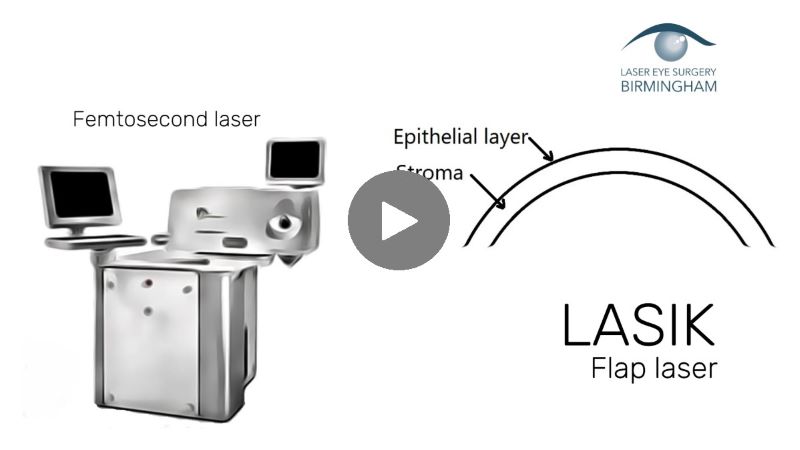
LASIK uses 2 different lasers. First, a femtosecond laser gently creates a layer of bubbles near the surface of your cornea (1). The femtosecond laser is so precise that each laser pulse lasts less than a billionth of a second. A thin flap is lifted (2).

A second excimer laser gently & accurately reshapes your cornea (3). When the flap is closed the cornea has the right shape to correct the focus of your eye (4).

LASIK is the best laser eye surgery procedure for a quick recovery. You can see the difference immediately & you can usually drive by the next day.
LASEK
LASEK, also known as PRK or advanced surface treatment, is also a 2-stage laser eye surgery treatment using only one laser, the excimer laser. First, the surface skin (epithelial) layer of the central cornea is loosened (1).
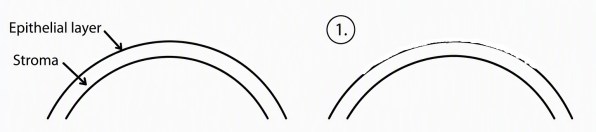
Then the underlying surface is reshaped using the same excimer vision correction laser (2) & the epithelial layer heals back with the new shape & focus.

The treatment is quick, but you recover slower than with LASIK surgery. It’s the best laser treatment for people with thin corneas & is also the best for some sports & occupations.
You could be a great candidate for laser eye surgery if:
- You’re 18 or older
- Your glasses or contact lens prescription has been stable for at least the last year
- You’re ready to enjoy more freedom from glasses and contact lenses
- Your eyes are generally healthy and you don’t have any medical conditions that could affect your vision
- You don’t have eye conditions such as glaucoma, cataracts, or other significant eye disease
- You’re not currently pregnant or breastfeeding
- You understand that laser eye surgery can significantly improve your vision, but no procedure can guarantee perfect eyesight
- You’re happy to attend a full assessment so we can determine the safest and most effective treatment option for you
The Next Step
The best way to find out if laser eye surgery is right for you is to book a comprehensive consultation. We’ll assess your eyes, discuss your lifestyle and vision goals, and recommend the most suitable treatment for you.
A few minutes in clinic could be the first step towards life with less dependence on glasses and contact lenses.
If you’re short-sighted, long-sighted, or have astigmatism, it usually comes down to the way light is focused in your eye.
During laser eye surgery, a highly advanced laser carefully reshapes your cornea by removing tiny amounts of tissue, measured in microns. These small adjustments can make a big difference, helping light focus where it should and giving you sharper, clearer vision.

It’s quick, incredibly precise, and tailored to your individual prescription
Advanced Technology for Exceptional Vision
At Laser Eye Surgery Birmingham, we use some of the most advanced laser technology available to make your treatment as precise, comfortable, and effective as possible.
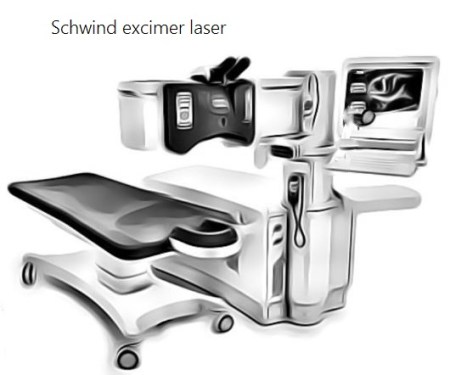
Your eyes are unique, which is why we use the Schwind AMARIS 750RS Excimer Laser, an award-winning laser system designed to deliver highly accurate, personalised vision correction with outstanding safety and reliability.
Why is the Schwind AMARIS 750RS so impressive?
Fast, but not too fast
The AMARIS 750RS delivers up to 750 laser pulses per second, meaning treatments are completed in just a matter of seconds.
But speed isn’t everything.
If a laser is too fast, it can generate excess heat, which may affect healing and treatment accuracy. If it’s too slow, the eye can start to dry out during the procedure, which can also affect results.
The AMARIS 750RS achieves the perfect balance. Its intelligent thermal control system carefully manages heat throughout the treatment, helping to ensure predictable healing and consistently excellent outcomes.
It keeps up with your eyes
Even when you’re trying your hardest to stare at a fixed point, your eyes naturally make tiny movements every second.
That’s completely normal, but it means your laser needs to be smart enough to keep up.
The Schwind AMARIS features one of the most advanced eye-tracking systems available, monitoring your eye movements in real time and adjusting instantly during treatment. It can track movement in multiple directions, ensuring the laser stays precisely focused on the correct treatment area throughout the procedure.
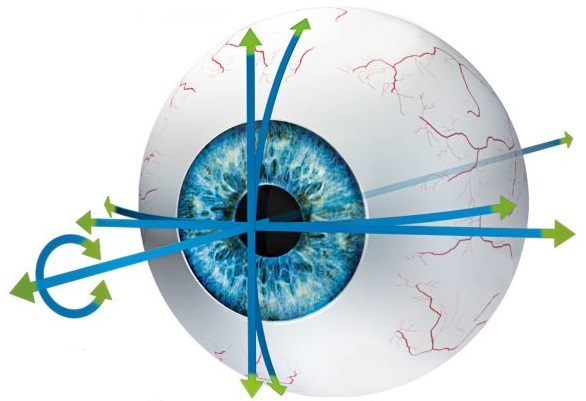
The result is an exceptionally accurate treatment that’s tailored specifically to your eyes.
Designed for confidence
The Schwind AMARIS 750RS has received international recognition for its advanced technology, precision, and patient outcomes.
For you, that means peace of mind knowing your vision is being treated with a laser system that’s trusted worldwide for its accuracy, reliability, and gentle approach to correction.
When it comes to your eyesight, precision matters. That’s why we use technology that helps deliver the best possible visual results for every patient.
| Treatment | Per eye |
| Wavefront LASIK | £1995 |
| Wavefront LASEK | £1795 |
| Initial consultation | £150 |
| 12 months aftercare | Included |
| Enhancement within 6 months | Included |
One price, for wavefront-optimised, all-laser, blade-free treatment. There’s no “basic” tier, because we don’t offer dated technology and then upsell you away from it.
For comparison, contact lens wearers typically spend £250–£400 every year, for life.
- The Expertise: Becoming a surgeon takes over a decade of studying and training. Then you also want someone with years of hands-on experience.
- The Tech: The tech used incredibly advanced. We use a hyper-precise femtosecond laser that’s expensive to buy and maintain to ensure that your procedure is as safe and effetive as possible.
Does Laser Eye Surgery Last Forever?
The short answer? Yes, the laser treatment itself is permanent. Laser eye surgery permanently reshapes your cornea (the clear front surface of your eye), and that change doesn’t “wear off” over time. However, your eyes are living, changing parts of your body, so it’s important to understand that your vision can still change naturally as you get older.What affects your vision?
Your overall focus depends on three things:- The shape of your cornea (this is the part corrected by laser eye surgery)
- The length of your eye
- The natural lens inside your eye
 Laser eye surgery permanently corrects the cornea, but the other parts of your eye can still change throughout your life.
What happens when I’m younger?
If you’re in your late teens or twenties and your eyes haven’t finished growing in length yet, your eye can continue to grow slightly after treatment. If this happens, your prescription may change a little over time. In many cases, a simple enhancement procedure can fine-tune your vision again if needed.What about later in life?
As we reach our forties and beyond, the natural lens inside the eye begins to age. This is a normal part of life and affects everyone, whether they’ve had laser eye surgery or not. You may notice changes such as needing reading glasses or a shift in your prescription. These changes are caused by the ageing lens, not because your laser treatment has stopped working.The good news
If your vision changes in the future, there are often excellent options available. Depending on your age and eyes, these may include:- A laser enhancement procedure
- Lens replacement surgery
- Multifocal lens implants that can reduce dependence on both reading and distance glasses
It’s a fair question. After all, if laser eye surgery is something eye surgeons trust for their patients, would they choose it for themselves?
The answer is yes.
Dr Mark Wevill has personally had laser eye surgery, and he’s not alone. Studies have shown that over 90% of refractive surgeons have either had vision correction surgery themselves or recommended it to their immediate family members.
In fact, refractive surgeons are around five times more likely than the general public to choose laser vision correction for their own eyes.
Why is that important?
The people who perform laser eye surgery understand the technology, safety, risks, and long-term results better than anyone. So when surgeons choose the procedure for themselves and their loved ones, it speaks volumes about the confidence they have in the treatment.
Over the years, Dr Wevill has performed laser vision correction for fellow surgeons, optometrists, friends, and family members, including his own wife and sister.
The bottom line
When it comes to your eyesight, trust matters. Knowing that your surgeon has personally chosen laser eye surgery and recommended it to those closest to him can provide extra reassurance as you consider your options.
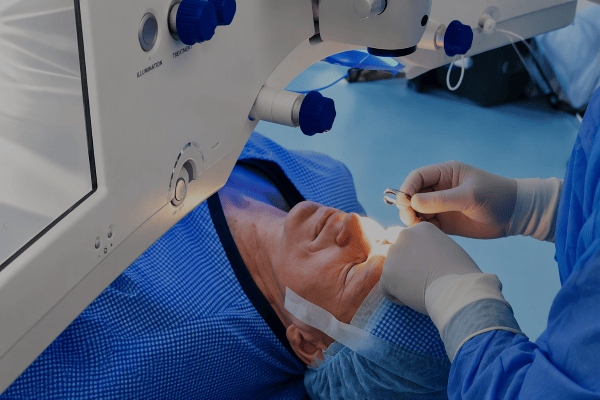
Mark having his LASIK surgery
For many people, the strongest endorsement isn’t an advert. It’s knowing that the experts trust it for their own eyes too.
Want to learn more? Read our blog: “Do LASIK Surgeons Have LASIK Surgery?”

As we approach middle age & the lens inside our eyes ages, we develop a condition called presbyopia. People who wear contact lenses or who have never worn glasses start to need glasses to read & see their phones. Short sighted people take their glasses off to read or get varifocal glasses. And others need thicker & heavier glasses for driving & seeing their phones.
Presbyopia can be treated with multifocal intraocular lens surgery or monovision laser eye surgery.
Take our quick vision correction test to see if lens replacement is a better option for you.

Absolutely.
Having astigmatism doesn’t rule you out for laser eye surgery. In fact, LASIK, PRK, and other laser vision correction procedures are specifically designed to treat astigmatism by reshaping the front surface of the eye (the cornea) so that light focuses more accurately.
Many people with astigmatism enjoy clearer vision and less dependence on glasses or contact lenses after treatment.
Am I Suitable?
That depends on a few factors, including:
- How strong your astigmatism is
- The thickness and shape of your cornea
- The stability of your prescription
- The overall health of your eyes
The good news is that modern laser technology can treat many types and levels of astigmatism with excellent results.
The Best Way to Find Out
The only way to know for sure if you’re a suitable candidate is to have a comprehensive eye assessment. During your consultation, we’ll carry out detailed scans of your eyes, discuss your vision goals, and recommend the treatment that’s best suited to you.
If you’re tired of relying on glasses or contact lenses because of astigmatism, laser eye surgery is a great option to explore.
It’s an important question, and one you should consider before deciding on any vision correction treatment.
All medical procedures carry some risks, including laser eye surgery. The good news is that modern laser technology and surgical techniques have made laser eye surgery safer and more predictable than ever before.
It’s also worth remembering that glasses and contact lenses aren’t completely risk-free either. Every vision correction option has its pros and cons, so it’s important to choose the one that’s right for your eyes, lifestyle, and goals.
What are the main risks?
Infection
Like any procedure, there’s a small risk of infection after laser eye surgery.
A severe infection could potentially lead to corneal scarring and affect vision. However, this is very rare. In fact, the risk of infection following LASIK is estimated to be lower than the risk associated with everyday contact lens wear.
You May Need a Small Touch-Up
Laser eye surgery is incredibly accurate, but occasionally the final result needs a little fine-tuning.
Think of it like picking up a new pair of glasses and finding the prescription needs a small adjustment. Some patients may benefit from a minor enhancement procedure a few months after treatment to achieve the best possible vision.
Published studies suggest this can happen in up to 6% of eyes. Dr Mark Wevill’s enhancement rate is around 2%.
Night Vision Effects
All types of vision correction, whether glasses, contact lenses, or laser eye surgery affect how you see at night. You probbaly have some night glare at the moment. Why not step outside tonight and have a look to see if you have any glare around streetlights or car head lights.
Some people notice more glare, halos, or starbursts around lights during the early stages of recovery. For most patients these symptoms improve as the brain and eyes adapt to the new vision.
Interestingly, many patients find their night vision is actually better after laser eye surgery than it was with glasses or contact lenses.
Dry Eyes
Dry eye symptoms are fairly common after laser eye surgery, especially during the first few weeks or months. Occasionally dry eyes can remian
Most people find these symptoms improve as healing progresses. In many cases, patients who previously wore contact lenses report their eyes feel more comfortable after laser eye surgery than they did while wearing contacts.
Other risks:
There are other risks which everyone has to consider and there may be risks specific to you. So we’ll discuss everything at your consultation.
Every pair of eyes is different, which is why a detailed consultation is so important.
We’ll assess your eyes, explain your individual suitability, discuss the benefits and potential risks, and answer any questions you have, so you can make an informed decision with confidence.
Is Laser Eye Surgery Safe?
Laser vision correction has been performed for more than 30 years and over 40 million procedures have been carried out worldwide.
Because of this, laser eye surgery is one of the most extensively researched and closely studied procedures in medicine. We have decades of data showing how safe and effective modern treatments can be, as well as a clear understanding of how to manage any issues should they occur.
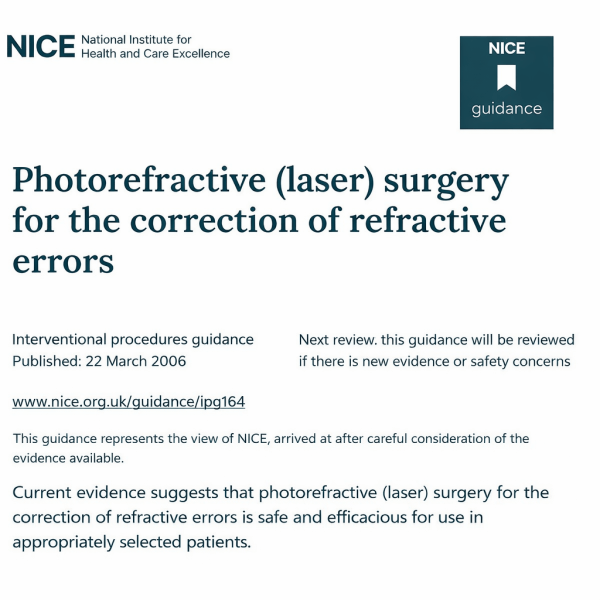
NICE (The National Institute of Care Excellence) says it’s safe and effective.
What Results Can I Expect?
The vast majority of patients achieve excellent vision after treatment.
- More than 98% of patients achieve 20/20 vision or better after laser eye surgery.
- If a small enhancement is needed, outcomes are even higher.
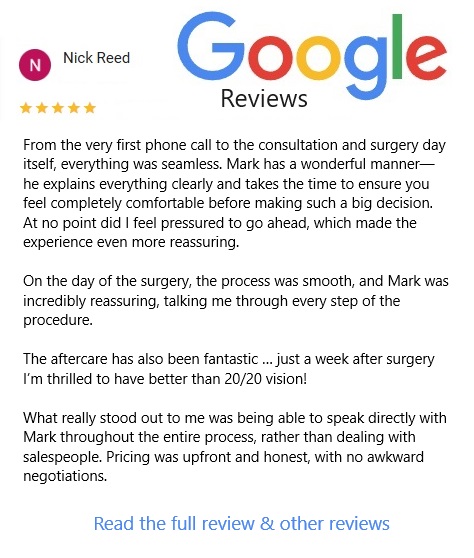
- Around 99% of patients say they would recommend laser eye surgery to friends and family.
You can read how pleased our patients are with their vision on these review sites: Google, iWantGreatCare & Doctify.
No vision correction option is completely risk-free, but for suitable patients, laser eye surgery has an excellent safety record, outstanding success rates, and high levels of patient satisfaction. The best way to understand your personal risks and potential benefits is to have a comprehensive consultation and discuss your eyes with an experienced surgeon.
At the consultation Mark Wevill will answer your questions, assess your eyes, and help you decide whether treatment is right for you.
First, we’ll get to know your eyes
Your consultation starts with a detailed discussion about your vision, lifestyle, medical history, and what you’d like to achieve from treatment.
Whether you’re fed up with glasses, tired of contact lenses, or simply curious about your options, we’ll take the time to understand your goals.
Then comes the high-tech eye assessment
We’ll carry out a comprehensive eye examination using advanced imaging and scanning technology to build a detailed picture of your eyes.
This includes measuring:
- The shape and curvature of your cornea
- Corneal thickness
- Your prescription and visual focusing system
- The overall health of your eyes
These scans help us determine whether laser eye surgery is suitable and which treatment option would give you the best results.
We’ll explain your options
Not everyone needs the same type of treatment. Depending on your eyes and prescription, we may discuss options such as:
- LASIK
- LASEK / PRK
- Alternative treatments if they’re better suited to your eyes
He’ll explain the differences clearly, including what the procedures involve, recovery times, expected results, and any potential risks.
Ask us anything
This is your opportunity to ask questions, raise concerns, and get answers from an experienced eye surgeon.
No question is too small, whether you’re wondering about recovery, driving, work, gym sessions, holidays, or simply what happens on the day of treatment.
Leave with a clear plan
By the end of your consultation, you’ll know:
- Whether you’re a suitable candidate for laser eye surgery
- Which treatment option is best for your eyes
- What results you can realistically expect
- The benefits, risks, and recovery process
Whether laser eye surgery is the right choice for you
The Bottom Line
A laser eye surgery consultation isn’t about pressuring you into treatment. It’s about giving you all the information you need to make a confident, informed decision about your vision.
The short version? It’s quick, painless, and you’ll probably be surprised by how easy it is.
Most patients spend around about 2 hours in the clinic, but the actual laser treatment itself usually takes around 10 minutes for both eyes. Even better, many people notice their vision improving within minutes of the procedure.
Before Your Treatment
When you arrive, we’ll carry out some final checks to make sure everything is ready for treatment. You’ll have plenty of time to ask any last-minute questions, and we’ll talk you through exactly what to expect.
We’ll also put some anaesthetic eye drops in your eyes, so the procedure is comfortable and pain-free.
During the Procedure
The treatment is surprisingly quick.
You’ll lie back comfortably under the laser while Mark Wevill guides you through each step. Although you may feel a little pressure at certain points, the treatment itself isn’t painful.
The laser works with precision, reshaping your cornea in seconds to correct your vision.
After the Treatment
Once the procedure is finished, you’ll have a check up in the clinic before heading home.
Most patients notice their vision is only a little blurry initially becoming clearer within hours after LASIK and a couple of days after LASEK.
You’ll need someone to drive you home, and we recommend taking it easy for the rest of the day.
How Long Does Recovery Take?
LASIK Recovery
LASIK is popular partly because recovery is so fast.
- Most people notice significantly improved vision within 8 hours
- Many patients can return to office type work the next day
- Vision continues to sharpen and stabilise over the following weeks
For many people, it’s one of the quickest recoveries of any elective procedure.
LASEK / PRK Recovery
LASEK takes a bit longer.
- Most people notice significantly improved vision within a couple of days
- Many patients can return to work within a few days
- Vision continues to sharpen and stabilise over the following weeks
LASEK is better for people with thinner corneas and for some sports and occupations.
Getting back to normal life
One of the most common questions we get is:
“When can I get back to work, exercise, driving, or wearing makeup?”
The answer depends on the treatment you’ve had and your individual healing process. We’ll provide a personalised recovery plan and clear aftercare instructions so you know what to expect.
For most patients, laser eye surgery day is far easier than they imagined. The treatment itself takes only minutes, it’s virtually painless, and many people are amazed at how quickly they see more clearly.
Before you know it, you’ll be heading home and beginning your journey towards life with less dependence on glasses and contact lenses.
Wavefront laser eye surgery is an advanced form of vision correction that reduces visual aberrations that can introduce some blur after treatment.
Your Eyes Are One of a Kind
Common vision problems include:
- Short-sightedness (myopia)
- Long-sightedness (hyperopia)
- Astigmatism
These are the main reasons people need glasses or contact lenses.
But your eyes can also have tiny optical imperfections that glasses and contacts can’t fully correct. These are known as higher-order aberrations, and they can contribute to things like:
- Glare from headlights at night
- Halos around lights
- Reduced contrast or sharpness in low-light conditions
- Less crisp vision overall
So What Does Wavefront Do?
Wavefront technology treats both the obvious prescription errors and these subtle imperfections. So, the laser can deliver a more personalised treatment that’s designed to optimise the quality of vision.
The goal is:
- Sharper vision
- Better night vision
- Reduced glare and halos
- Improved overall visual quality
Why Does This Matter?
Older laser systems could sometimes increase these tiny optical imperfections during treatment.
Modern wavefront-guided and wavefront-optimised laser treatments are designed to minimise that risk and preserve the eye’s natural optical quality.
The result is often clearer, crisper vision, especially in challenging lighting conditions.
It’s Not Just Used in Eye Surgery
Interestingly, the same technology is used by photographers and astronomers.
High-end cameras and telescopes use wavefront-based optics to reduce distortion, sharpen images, and help capture incredibly detailed photographs of distant objects, from wildlife to faraway galaxies.

If it’s good enough to help scientists see distant planets more clearly, it’s pretty impressive technology for your eyes.
What About at Laser Eye Surgery Birmingham?
The good news is that all of our LASIK and LASEK treatments use modern wavefront-optimised technology as standard.
We don’t offer outdated laser treatments because today’s technology can achieve better visual outcomes with greater precision and accuracy.
That means when you choose laser eye surgery with us, you’re benefiting from the latest generation of laser vision correction technology, designed to give you the clearest, sharpest vision possible.
The Bottom Line
Wavefront laser eye surgery takes vision correction to the next level. By treating both common prescription errors and subtle optical imperfections, wavefront treatment delivers sharper vision, better night-time performance, and an even higher quality of sight.
- Check the reviews: Obvious but it’s important to see what people say about their experience.
- Check the qualifications: For context, our surgeon, Mark Wevill, has plenty of professional green flags: he holds a Fellowship from the World College of Refractive Surgery, the official Certificate in Laser Refractive Surgery from the Royal College of Ophthalmologists, and a Postgraduate Diploma in Refractive Surgery.
- Beware the “One-Trick Pony”: Does the surgeon have a range of skills to match to your lifestyle needs? Do they listen to your needs? If a surgeon only knows how to do one type of procedure, they are like a person holding a hammer—to them, every single problem looks like a nail, even if a screw or glue would work way better. You want options tailored to you.
- Check the Tech & for Transparency: Are they using advanced laser technology and are they transparent about the potential risks and what results you can realistically expect.
Both SMILE (also known as KLEx) and LASIK are highly effective vision correction procedures with excellent safety records and outstanding results.
What’s the Difference?
Both treatments reshape the cornea to correct vision, but they do it in slightly different ways.
LASIK involves creating a thin flap on the surface of the cornea. The flap is gently lifted, and an advanced laser reshapes the underlying tissue before the flap is repositioned.
SMILE (KLEx) takes a different approach. Instead of creating a flap, the laser forms a small disc of tissue (called a lenticule) within the cornea, which is then removed through an incision.
For patients, the experience and end goal are very similar: clearer vision with less dependence on glasses or contact lenses.
Do They Give Similar Results?
In most cases, yes.
- Both procedures are highly accurate
- Both have excellent safety profiles
- Both provide outstanding long-term vision correction
- Both offer relatively quick recovery
- Both result in similar corneal biomechanical strengths afterwards
For correcting short-sightedness (myopia), the visual outcomes are very similar. LASIK gives slightly better results, corrects astigmatism slightly better and recovery is quicker than SMILE / KLEx.
At present, SMILE is not widely used for long-sightedness, and there is less long-term data available compared with LASIK.
There is some evidence that SMILE causes slightly less dry eye than LASIK, but both cause some dryness.
And SMILE is usually more expensive than LASIK.
If you have thin corneas then you are not suitable for either treatment, but you will probably be suitable for LASEK or ICLs.
In summary …
Both SMILE and LASIK are excellent procedures with outstanding results. Neither treatment is “better” than the other.
Mark has done thousands of laser eye surgery procedures including LASIK, LASEK and SMILE / KLEx. He found SMILE gave people no significant advantage to LASIK and LASEK and it costed people more, so he no longer offers the SMILE / KLEx procedure.
People’s stories
Christy | Award winning Landscaper

Christy surfs in Bali as much as possible & designs biodiverse, water sensitive, low maintenance landscapes as part of the Design With Nature team. Their inspiring & sustainable designs were awarded a gold medal by the Royal Horticultural Society. How does Christy combine the two? Well, he tries not to get beach sand in his laptop!