

VISIAN EVO ICL SURGERY



Intraocular Contact Lens (Visian ICLs): An Alternative to Laser Eye Surgery
Evo ICL surgery, also known as implantable collamer lens surgery, is an excellent vision correction solution available in Birmingham, especially for those who have high focus errors (thick glasses) that can’t be corrected by laser eye surgery, & for people who are concerned about laser eye surgery.
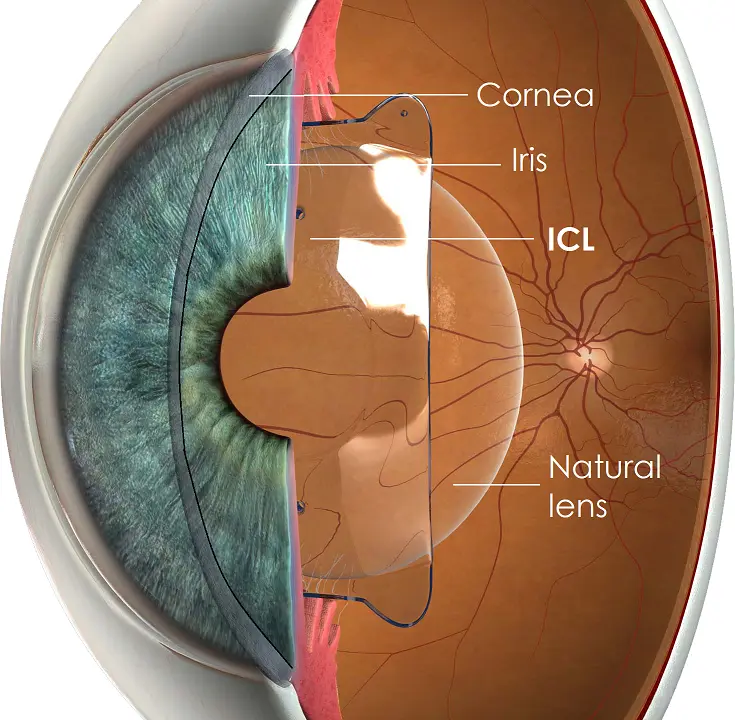
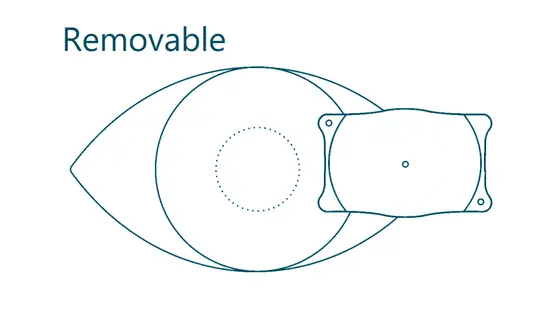
Why have contact lenses on your eye if you have to remove & change them frequently to avoid severe eye infections when an intraocular contact lens can remain safely in your eye for decades? The Evo ICL is gently placed inside your eye between your iris (the coloured part of your eye) & the natural lens to focus what you’re looking at.
Unlike other surgical treatments like lens exchange or LASIK, no tissue is removed. So, if necessary, the Evo ICL lens can be removed & you return to wearing your glasses again.
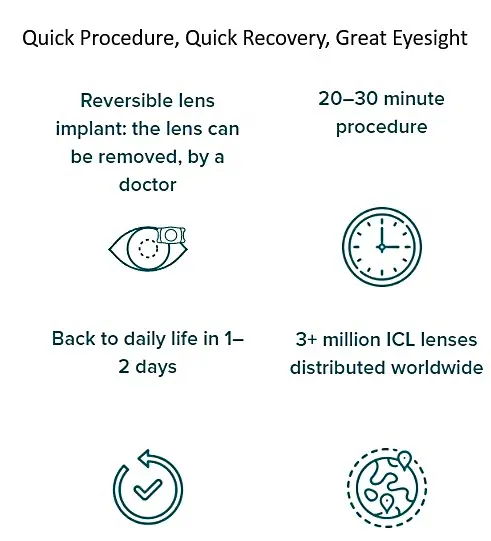
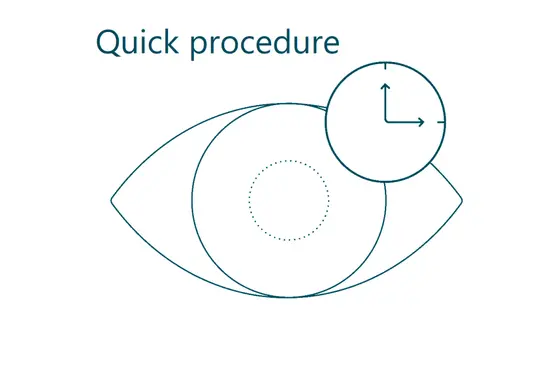
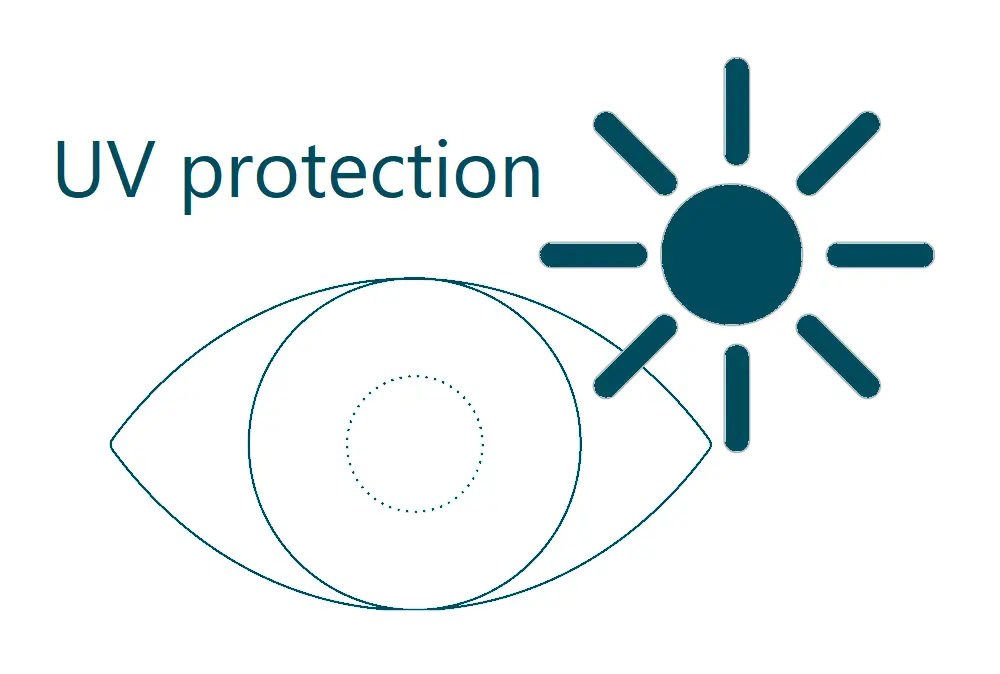
You can’t see the Evo ICL, it’s invisible to you & other people. The Evo ICL eye surgery procedure is painless & takes about 10 to 20 minutes. Evo ICL lenses provide UV protection while giving sharp vision.
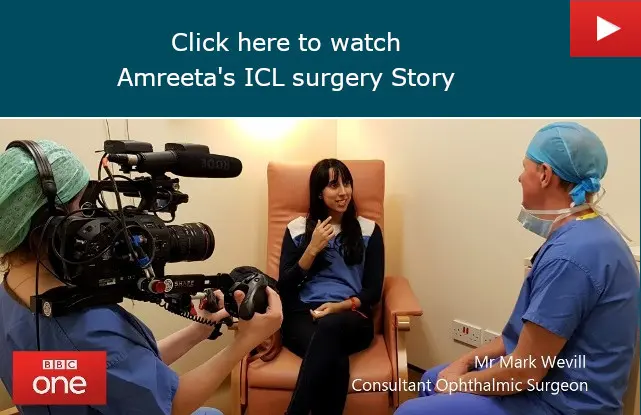
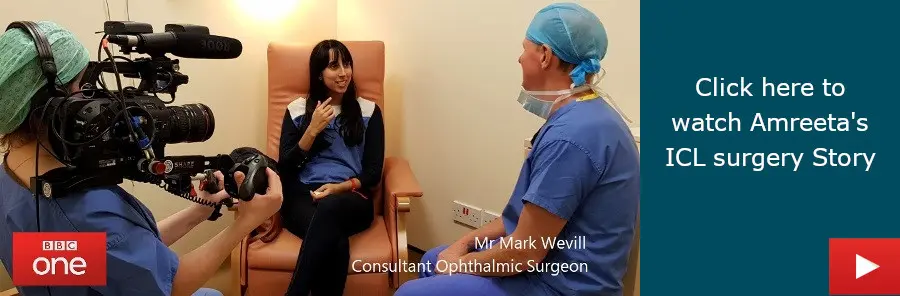
Mark is one of the few recently accredited Stella Staar EVO ICL surgeons in Birmingham & has given hundreds of people precise, clear vision with ICL lenses over the last 20 years. One of them, Amreeta, was featured on the BBC’s “One day that changed my life” program.
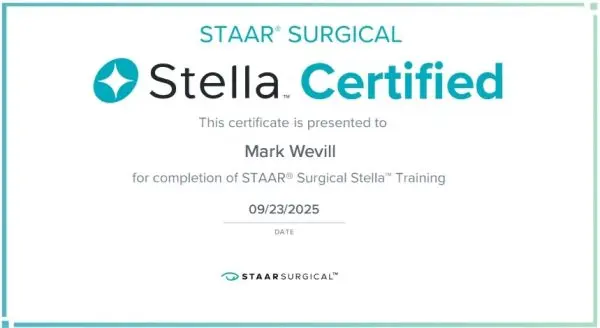
Mark keeps up to date with ICL developments and was Stella Certified in 2025. And the latest generation of advanced ICL’s, the EVO ICL is now available from Mark In Birmingham. The EVO is the next Evolution in visual freedom designed to provide premium refractive outcomes.
"Mark, you are a genius! So patient with me as I turned into wimp of the year. And with such a calm nature. The surgery is so well worth it - just go for it! Be brave!"

About Intraocular Contact Lenses (ICL)
What is an Intraocular Collamer Lens
The intraocular collamer lens is called a phakic lens. It is an artificial contact lens type lens which is placed between your own natural lens & the coloured part of your eye, called your iris. The lens creates naturally clear vision if you’re ready for a life free from glasses and contact lenses.
Advantages of ICL Surgery in Birmingham
- Reversible: ICL surgery is reversible, allowing for lens removal or replacement if necessary.
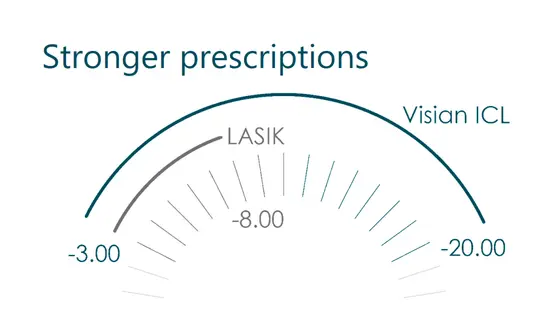
- High Myopia: Suitable for individuals with high degrees of myopia (nearsightedness).
- Clear Quality of Vision: ICL’s have less risk of dry eyes which can affect vision clarity. And ICL’s deliver a better quality of vision than LASIK for very short-sighted eyes.
- Stable Results: ICL Vision correction is stable sooner than high myopia laser eye surgery and is may be more stable in the long term too.
- Quick Results: Immediate improvement in vision within a day or two.
- Low Discomfort: Generally minimal discomfort during recovery.
- Predictable Outcomes: Highly precise and predictable results.
Suitable for people with thin corneas.
Your ICL Consultation
At your consultation in Birmingham, your eye will be scanned with a number of advanced technology eye instruments. Mark, the surgeon, reviews the scans, examines your eyes, discusses your suitability & the risks of surgery. The Visian ICL lens requires at least 2.8mm of space to be implanted into your eye, so accurate measurements of your eye are important.
Precise calculations then determine the correct ICL lens size & power for you.
Mark has been an eye surgeon since 1996 & has corrected people with high focus error up to minus 25 since then. Like with all surgery, there are risks with ICL surgery. Therefore talk to Mark Wevill who is one of the UK’s most experienced ICL surgeons about the benefits, risks & potential complications of surgery. ICL lenses changed our patient Amreeta’s life (read more …). So when you are ready for freedom vision why not make an appointment with Mark at the Birmingham eye clinic to see if you’re suitable for ICL treatment.
The ICL Surgery Procedure
The ICL is gently inserted into the space between your iris and your natural lens. The procedure is usually painless & takes about 10 to 20 minutes to change your life.
No needles or injections are involved. Recovery is also quick and people usually see very well the next day. So this phakic lens implant may be the ideal vision correction solution for you & may produce clearer vision than laser eye surgery especially in eyes with high focus errors.
ICL’s are usually best for you if you are aged between about 20 & 50. If you are older & your natural lens isn’t functioning well, then you may have better vision if the lens is replaced than with an ICL procedure. Read more about lens replacement here.
ICL lenses have been approved for use in Europe since 1997. More than 3 million ICL lenses have been implanted worldwide. Mark has used the Visian ICL & similar lenses such as the Verisyse & Artisan or Artiflex & other phakic lenses since 1998.
Amreeta's ICL Story
Mark implanted the latest Evo plus Visian ICL’s in Amreeta’s eyes before she went on a 3-month trip of a lifetime to the east where she skydived, rode elephants & held pythons. Her consultations, surgery and amazing results were all done right here in Birmingham and were featured on the BBC1 programme “One day that changed my life” in September 2018.
What is the EVO ICL & how is it different?
The EVO ICL (Implantable Collamer Lens) is a significant evolution in the technology of implantable lenses. The EVO ICL incorporates several design changes to improve visual quality, & eye safety. Here are some key differences:
1. The central port helps with fluid flow within the eye, which reduces the risk of elevated intraocular pressure (IOP) without the additional surgery of an iridotomy (a small hole created in the iris).
2. EVO ICLs are designed to give sharper vision with better contrast sensitivity compared to earlier models. This improves night vision & causes less visual disturbances.
3. The EVO ICL is available in a wider range of powers so it can correct a broader spectrum of refractive errors especially for people with high myopia (near-sightedness).
4. The EVO ICL is thinner and more flexible than earlier designs. This makes implantation easier & reduces the risk of complications.
5. The EVO ICL reduces the possibility of forming a cataract compared to older ICL versions.
Overall, the EVO ICL is safer & better than earlier generation ICLs for many people.
Is the EVO ICL best for everyone?
The EVO ICL is an excellent evolution of the wonderful ICL technology. However some people aren’t good candidates for ICL’s or for EVO ICL’s. For some people the EVO ICL isn’t the best vision correction solution because the tried & tested previous generation ICL’s are better for them.
At your consultation with Mark Wevill in Birmingham, we’ll talk about the best vision correction solution for you & the best type of ICL for your eyes. Mark Has been implanting ICL’s for over 20 years, he has had excellent results & will be able to tell you whether you’re suitable for the ICL if so, which ICL is best for you.
Benefits of ICL lenses
More about ICL's
ICL’s are one type of intraocular lens implant known as phakic or additional lenses as they are implanted into an eye with the original natural lens still in place. So ICL’s are implanted in addition to the natural lens in the eye. Another procedure known as refractive lens exchange (RLE) involves removing the natural lens & replacing it with an artificial intraocular lens (IOL). Both are good procedures but the reasons for doing them differ.
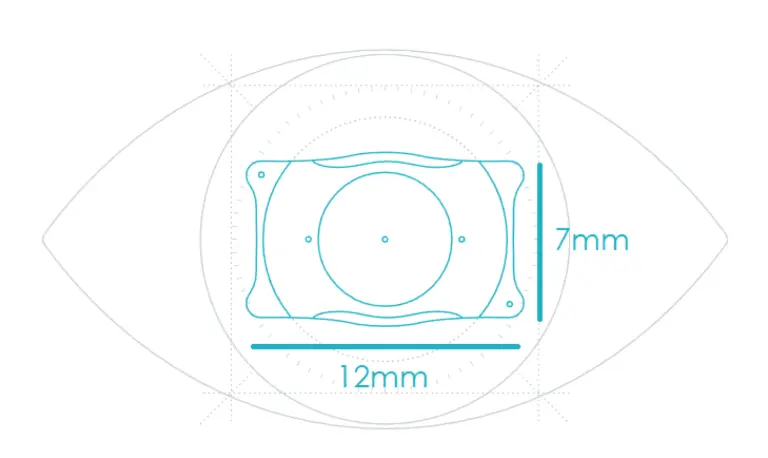
ICL’s are tiny lenses which are placed in front of the natural lens which is left in position. It’s like wearing a small, soft contact lens inside your eye. It’s only about 12mm long, 7mm wide and less than 0.5mm thick in the middle. It doesn’t cause dry eye syndrome & the daytime & night visual clarity is excellent. It is great for people with thin corneas. Other benefits of the treatment include built-in UV protection in the lens, quick recovery & the lens can be removed if necessary.
There are different ICLs which can correct short-sightedness (myopia), far-sightedness (hyperopia) & toric ICLs can be used to correct astigmatism.
So, if you would like to find out if your eyes are suitable for Visian ICL intraocular lens surgery, please call us.
More Frequently Asked Questions About Visian ICL Surgery
What is the difference between Visian ICL and traditional contact lenses?
The main difference between Visian ICL (Implantable Collamer Lens) and traditional contact lenses is that Visian ICL is implanted into the eye, while traditional contact lenses are worn on the surface of the eye. Visian ICL is a long-term vision correction solution to correct focus errors like myopia (nearsightedness), while traditional contact lenses are removable and usually require daily insertion and removal. Visian ICL’s are also a different shape, are smaller and are made of a different soft material to usual contact lenses and do not make eyes feel dry or uncomfortable like contact lenses do. In fact there is hardly any similarity between them except that as with contact lenses, ICL’s can be removed.
How long does the ICL last? Is it permanent?
Visian ICL is designed to be a long-lasting vision correction solution but is not necessarily permanent. It can last indefinitely if there are no complications or changes in your vision, but it can also be removed or replaced if needed. It offers a more permanent vision correction option compared to traditional contact lenses, which need to be replaced regularly.
Are there any age restrictions for undergoing ICL surgery in Birmingham?
Yes, there are age restrictions for undergoing ICL (Implantable Collamer Lens) surgery. Typically, candidates for ICL surgery are between the ages of 18 and 50. It is essential to have a stable prescription and good eye health before considering ICL surgery.
How often should I visit the doctor for check-ups after the surgery?
After Visian ICL surgery, you should follow our recommendations for post-operative care. Typically, you’ll have a couple of follow-up appointments in the first few weeks after surgery with less frequent check-ups afterwards as advised by us. The exact schedule may vary depending on your individual healing progress. And you will need to return yearly afterwards for follow-up appointments.
Are there any activities or environments I should avoid post-surgery?
After ICL (Implantable Collamer Lens) surgery, it’s generally advisable to avoid activities and environments that may increase the risk of eye injury or infection during the initial healing period. This can include:
1. Swimming: Avoid swimming in pools, hot tubs, the sea, rivers and lakes for a few weeks to minimise the risk of infection.
2. Strenuous Exercise: Avoid strenuous exercise or activities especially those that increase the risk of eye trauma for a few weeks.
3. Dusty or Dirty Environments: Try to avoid dusty or dirty environments that could irritate your eyes or increase the risk of infection.
4. Rubbing Your Eyes: Avoid rubbing or touching your eyes to prevent moving the lens or introducing infection during the healing stage.
Always follow our post-operative care instructions to ensure the best possible outcome and minimise risks.
What is Visian ICL surgery, and how does it differ from regular lens implants?
Visian ICL (Implantable Collamer Lens) surgery is a vision correction procedure that involves implanting a micro-thin, biocompatible lens behind the iris and in front of the eye’s natural lens.
It is used to treat focus errors of the eye including near-sightedness (myopia), farsightedness (hyperopia) and astigmatism. Laser eye surgery can achieve the same results, but Visian ICL’s are a better option for people with thin corneas or those who aren’t suitable for laser eye surgery for other reasons.
The usual lens implants, such as those used in lens replacement and cataract surgery replace the natural lens of the eye with an artificial lens. The Visian ICL doesn’t replace the eye’s natural lens. It is an additional lens placed into the eye just in front of the natural lens to correct vision. The natural lens is left in the eye. The main advantage of Visian ICL is that it can be removed if necessary.
What is the cost of ICL surgery in Birmingham?
The cost of ICL surgery in Birmingham varies depending on the type of ICL lens you need. Contact our clinic for a personalised quote and to discuss financing options. The cost may seem high but it’s not so bad when you consider what you have spent and will spend on vision correction in the future. Try the calculator below to work out your vision correction costs.
Can I have ICL surgery if I have astigmatism?
Yes, toric ICLs are available to correct astigmatism along with nearsightedness or farsightedness.
How long is the recovery period after ICL surgery in Birmingham?
Most patients experience improved vision within a day or two after surgery. Full recovery typically takes a few weeks, but you can usually return to normal activities within a few days.
Is ICL surgery painful?
The ICL procedure is generally painless, and performed under local anesthesia. You may experience some mild discomfort during recovery, but this is usually minimal.
How much are you spending on vision correction?
Yes, Evo ICL prices might seem like a lot upfront, but look at the long-term savings. Ditch the contacts, invest in your eyes, and keep your cash. Do yourself a favour and calculate what you’ll spend on glasses and contacts over your lifetime. You could be saving thousands of £££ with Evo ICL.
And you can finance the treatment so you don’t have to empty your bank account.
Lifetime Vision Cost Calculator
Estimated Remaining Lifetime Cost
Book a Consultation for ICL Surgery in Birmingham
The price of Visian ICL surgery varies depending on the type of ICL lens you need. But we want to make the cost of implantable contact lens surgery & the remarkable care we give you affordable.
Contact us today to book a consultation to find out everything you need to know before making your final decision.