CATARACT SURGERY IN BIRMINGHAM

Cataracts cause cloudy vision, are common & correctable

Cataracts not only impair your vision, especially at night, but cataracts can also affect your mental health by making you feel frail, unconfident, isolated, lonely, unsafe & dependent on others. And cataracts are common, affecting up to 30 percent of people over the age of 65 in the UK. 

Early diagnosis of cataracts & cataract surgery can restore your vision, improve your mental health & transform your outlook on life. Cataract surgery even slows down dementia & prolongs life. Cataract surgery is safe, effective & is the most common surgical procedure in the UK. Over 300 000 cataract operations are done in England every year, that’s about 100 cataract operations done every hour.

And there’s more good news. Wonderful new intraocular lenses (IOLs) can restore youthful near & distant vision reducing your need for glasses. So, your choice of intraocular lens is important. This advanced cataract surgery with the different types of intraocular lenses is available with us here in Birmingham.

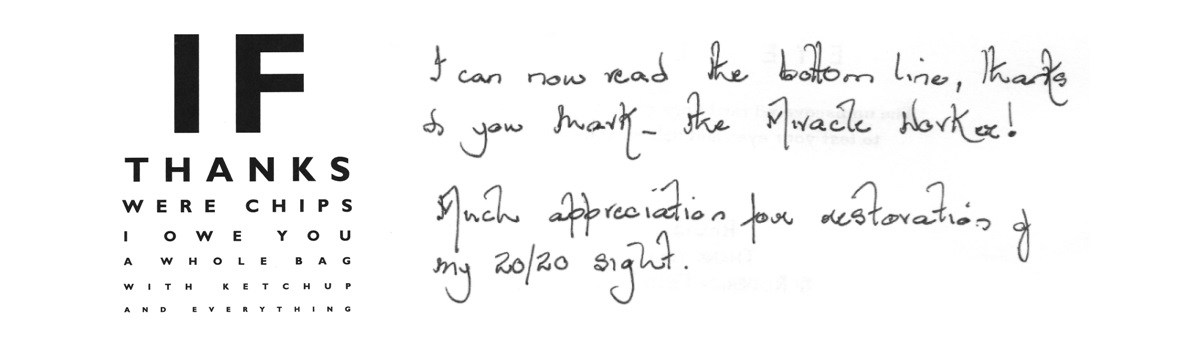
"I can now read the bottom line, thanks to you Mark - the miracle worker! .

About Cataracts and Cataract Surgery

A cataract is a clouding of the lens in an eye which sits behind the dark pupil and focuses images so we see objects clearly. As cataracts develop the focus of the eye changes & you have to update your glasses frequently. Driving at night can become difficult because of increaseing glare from car headlights.

As the cataract gets worse, even a new pair of glasses doesn’t clear up your vision because it’s as if you’re looking through a frosted window. One eye may be affected more than the other, but cataracts usually affect both eyes eventually. 

There are many causes of cataracts including ageing, smoking, sunshine & diabetes, & some are inherited in our genes. We don’t understand all the causes & even young people occasionally get cataracts.

We can’t avoid getting older, but healthy living when we’re younger may avoid us developing cataracts until we’re much older.

Come & see us or bring your parents & we’ll scan the cataracts & your eyes with advanced technology scanners. Then we’ll & talk about whether cataract eye surgery is the best solution & talk about the best IOL for you personally.

The cataract operation is done carefully & precisely under a surgical microscope. And cataract surgery has progressed to become one of todays most painless & lowest risk, highest benefit operations. This delicate surgery can be gently done by a skilled eye surgeon using only eye drops & no needles. As soon as the day after the operation most people say everything seems brighter, they see better than they have for years & they didn’t realise how much their vision had deteriorated.

Anaesthetic eye drops are dropped into your eye. Needles are usually unnecessary. A 2mm incision is made at the edge of the cornea (the clear window on the front of your eye) using an operating microscope. The cloudy cataract lens is gently softened using an ultrasound probe then “vacuumed” away. A new, clear lens is placed in the same position as the old one, supported by the same supporting ligaments so no sutures are necessary. Patients say the procedure is painless & all they saw were lights & shapes.

There are a few activity restrictions after the operation & we’ll give you instructions about how to look after your eye. There is no additional cost for your follow-up appointments which can be in Birmingham.

Please come for a consultation or call us for the price of cataract surgery, which depends on the type of lens that’s best for you.

Your new artificial lens works by bending light in a similar way to how your natural lens used to focus light when it was clear.  But the power of the lens is carefully chosen to suit your eye just like glasses or contact lenses are specifically selected to give you clear vision & won’t be ideal for other people.

Therefore we can correct some or all of the focus errors of your eye with the lenses we choose. We want your vision to be as clear as possible with as little need for glasses as possible after your cataract surgery.


Monofocal IOLs: These clear lenses improve distance or near vision but can’t give you distance & near vision & can’t correct astigmatism. So after monofocal IOL cataract surgery, most people need glasses.

Enhanced monofocal & extended depth of focus IOLs: These IOLs improve distance & intermediate distance (computer & satnav) vision. However, you will need near vision glasses after your cataract surgery.

Multifocal IOLs: These lenses provide distance, intermediate & near vision correction, so you can drive, and see your computer & your phone without glasses. They cause some glare at night which usually reduces to the point of not being aware of glare within a few months.

Toric IOLs: These IOLs correct astigmatism & can be monofocal or multifocal lenses.

The best lens is different for each person & depends on the health of your eye, your needs, your lifestyle & the cataract surgery cost you can afford. At your appointment in Birmingham we’ll talk, scan your eyes with high tech scans & decide together on a tailor made vision correction solution for you.

There are so many benefits of cataract surgery.

  • Your cloudy vision is replaced with more crisp, sharp vision.
    Better night vision with less glare from car headlights.
  • Brighter colours.
  • You may not need glasses afterwards. You can achieve good close & distance vision with new advanced lens implants and astigmatism can be corrected with new lenses.
  • Better sleep at night. Brighter vision during the day has been shown to improve sleep.
  • A happier, healthier life. Cataracts increase depression, isolation & are associated with a lower mood. Cataracts restrict people’s activities & increase the risk of falls and broken bones.
  • Better detection of other eye problems. Eye care professionals are able to diagnose, follow & treat other eye conditions better when the cataract has been removed.

And there may be even more benefits depending on your personal circumstances.

Graphic cross-section showing two eyes, horizontally positioned, for comparison, one with a clear lens and one with a cataract.
Graphic cross-section showing two eyes for comparison, one with a clear lens and one with a cataract

Cataract Surgery Explained

Dr Mark Wevill's Approach to Cataract Surgery

Mark Wevill is a Birmingham based ophthalmologist who has done more than ten thousand cataract operations. He’s a refractive cataract surgeon meaning that he not only removes the cloudy cataract but he also selects lenses to make you as free of glasses as possible. These lenses extend the range of your vision & many people can drive & read without glasses afterwards. 

The latest intraocular lenses such as the Zeiss Atlisa, AtLara, Finevision, SBL3, Tecnis Symfony, Synergy, toric & other lenses have transformed hundreds of his Mark’s eye patients’ lives. Mark Wevill has been an eye surgeon and performing cataract operations since 1992 and in Birmingham & the West Midlands since 2002. He works with a team of experienced & dedicated eye care professionals.

Occasionally a high tech laser adjustment can further improve your vision after cataract surgery & Mark is one of the UK’s most experienced refractive laser eye surgeons too.

Other Frequently asked questions about cataracts

The most significant risk factor for cataract formation is getting older & unfortunately, we can’t avoid this. Cataracts usually occur in the eyes of people aged over 60 because of the accumulated consequences of smoking, diabetes, exposure to lots of sunlight & other factors. But even babies & children can develop cataracts because cataracts can be genetic too.

“Overusing” your eyes is not a cause of cataracts so don’t try to “use your eyes less” to try to stop the cataract from progressing when it starts. And your cataracts aren’t infectious so don’t “spread” from 1 eye to the other. They often just occur in both eyes at about the same time.

Yes, cataracts can also develop in different parts of the lens & have distinctive shapes or appearances. A small cataract at the edge of your lens won’t trouble you as much as when it grows large and closer to the centre of your lens.

When you’re having difficulty doing normal daily activities such as driving & reading, then cataract surgery is essential.

There is no known dietary, lifestyle or medical treatment for cataracts that will stop or reverse cataract formation once it has started. However, cataract operations are safe & very effective.

Cataracts cannot be completely removed with a laser. However, some steps of the operation can be done with a femtosecond laser. Laser assisted operations are no more effective or safe than routine cataract surgery, however the cost is higher. Mr Wevill used to do laser assisted cataract surgery in Birmingham, but as there was no benefit. He doesn’t do laser cataract surgery anymore to keep the cost to a minimum.   

If the focus of the eye isn’t the best it can be after cataract surgery, then a few months later the focus can be adjusted with another type of laser called an excimer laser, which is effective, safe & the best way to adjust the focus. Mr Wevill is one of the most experienced excimer laser surgeons in Birmingham.

And months or years after cataract surgery a membrane often thickens behind the lens. This is called capsular opacification & is removed with a YAG laser. 

Cataract operations are usually scheduled for separate days & the worst eye is usually operated on first. But you can have cataract surgery on both eyes on the same day. Most cataract operations in the UK are done on separate days at the moment.

Same-day surgery is more convenient but there is a small risk of surgery complications happening in both eyes to consider.

Straight after the operation you have a patch over your eye which you remove a couple of hours later. By this time you will be able to see well enough to make a cup of tea and get around your home. By the next day your vision is usually quite good and continues to improve over the next few weeks or months.

You’ll usually be there for a couple of hours. The operation usually only takes about 15 minutes but we like to check you’re OK before and afterwards & make sure you know how to look after your eye when you get home.

Severe problems are rare, but as with all operations, complications do occur. These can include infection, inflammation, blurred or worse vision, or further surgery. We’ll go through the risks in detail at your consultation.

On the day of surgery, we will give you detailed instructions about how to look after your eyes, what drops to use & when, what you can & can’t do, give you phone numbers you can call if you are concerned & when to come back for your follow up appointments. You are unlikely to have any pain afterwards.

Find out more about the costs of monofocal and multifocal cataract surgery in our cost section.

Cataract surgery and lens replacement surgery are very similar, but they differ in their objectives. Cataract surgery is done when the eye’s natural lens becomes clouded due to cataracts, impairing vision and even glasses don’t give crisp, clear vision. During cataract surgery, the cloudy lens is removed and replaced with a clear, artificial intraocular lens (IOL) to restore clear vision.

In contrast, lens replacement surgery, often called refractive lens exchange (RLE) or clear lens extraction (CLE), is done to correct focus errors of the eye. Glasses give clear vision, but the person doesn’t want to wear glasses. These focus errors can be near-sightedness, farsightedness, or presbyopia. Lens replacement involves the same procedure of removing the natural lens (which is still clear) and replacing it with another clear IOL to which reduces the need for glasses. 

While both surgeries involve IOL placement, the reasons for the procedures differ.

Book a Consultation

This might all seem a little confusing or overwhelming to you. That is why we are here to assist you, explain everything to you & treat you in the best & most affordable manner possible. Don’t hesitate to contact us to arrange an obligation-free consultation with Mark so that you can claim back your vision. 

Transformative Cataract Eye Surgery: Patient Experiences in Birmingham

05 May 2022

 Mr Wevill came very well recommended for my mum’s cataract surgery as being one of the elite. Macular degeneration had taken her other eye already, so even more stressful to trust in someone to perform the cataract operation on your only good eye. He explained everything to her with total honesty and put her mind at ease. He is very approachable and caring. My mum’s vision has dramatically improved since the operation. Would highly recommend him.

13 January 2022

A most satisfactory experience having now had cataract procedures completed on both eyes. Mark is an absolute gentleman giving confidence to his patient at all times and most importantly a successful outcome. Thank you Mark.

19 December 2021

 Very pleased with the care I received from Mark Wevill. The surgery he performed was cataract removal and refractive lens replacement, basically removing my natural lens and replacing with an artificial one. The procedure was fully explained and completely pain free, I couldn’t believe how smooth it all went. It was wonderful to wake the day after my first operation and be able to read text messages without my specs, it was unbelievable.

As Seen in:

Scroll to Top